Sunday, August 20, 2017

What the 'Only True Church' declaration does and doesn't mean ....

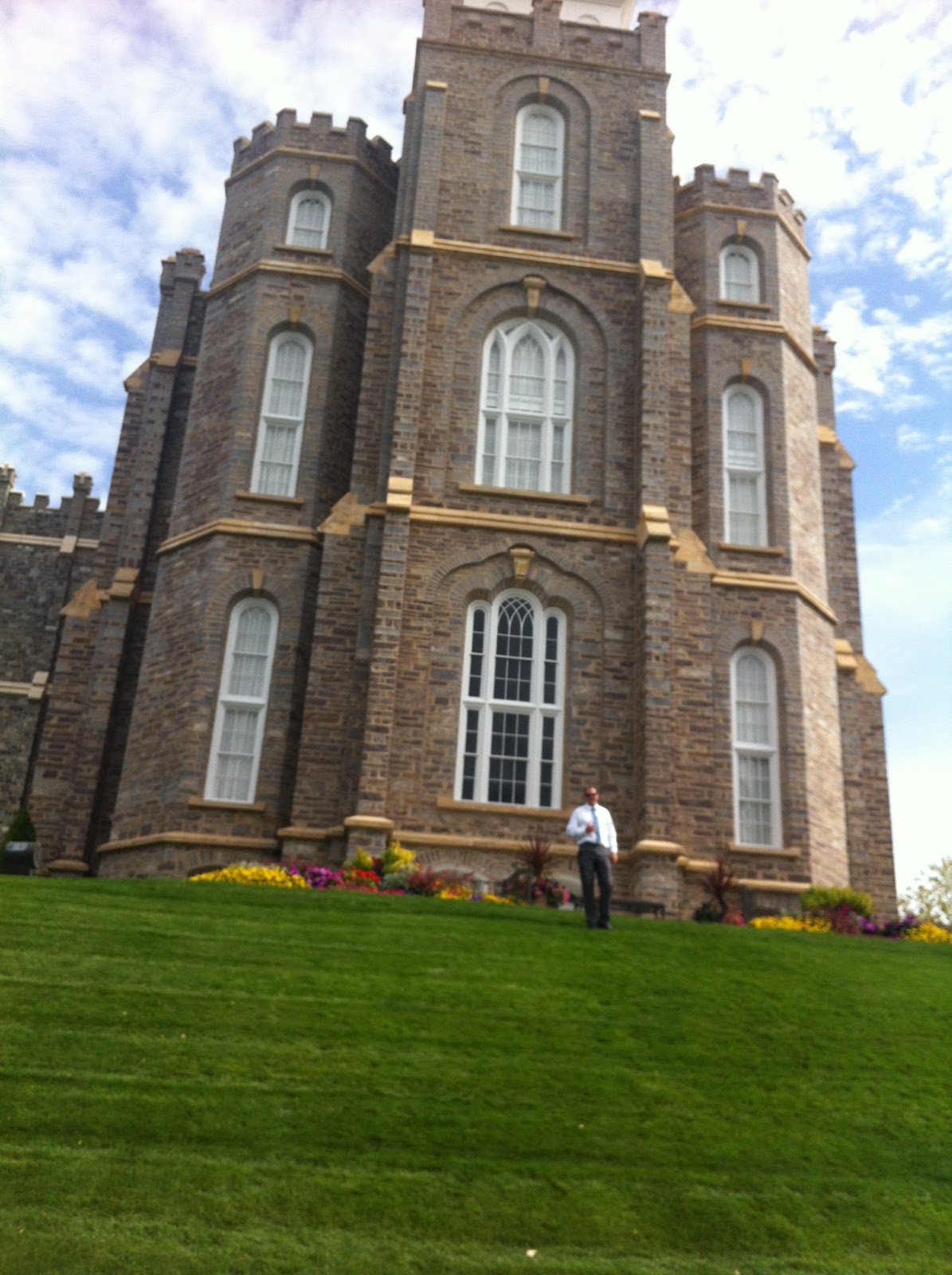
               The administration building for The Church of Jesus Christ of Latter-day Saints.


MEMBERS of The Church of Jesus Christ of Latter-day Saints, and in particular, its full-time Missionaries, likely need a deeper understanding of what the "Only True Church" declaration does mean and does not mean.
A masterful discourse given in 2007 by Robert L Millet, then a professor of ancient scripture and emeritus Dean of Religious Education at Brigham Young University, offers many insightful dimensions on other Christian Faiths and how LDS members should view and deal with them.
Some of the teachings of this long discourse, now contained on the Religious Studies Center Website at BYU, are indeed deep. However, those who take the time to read and study it will never think about Christians of other faiths in quite the same way again.
At least the first half of this discourse should be required study for outgoing missionaries from the MTC. 

-Cut and paste the Web address below to access Robert L. Millet's discourse on "Joseph Smith and the 'Only True and Living Church'":

https://rsc.byu.edu/archived/selected-articles/joseph-smith-and-only-true-and-living-church

Saturday, August 19, 2017

By far, the most often used incorrect scripture in Sacrament Meetings?


JOSEPH Smith stressed that erring in doctrine DOES NOT prove that someone is not a good person.... and we ALL error at times in doctrine. (Joseph Smith, History of the Church of Jesus Christ of Latter-day Saints, 5:340.)

Notwithstanding, there is one single scripture that is misused far, far more often than any other, possibly church-wide.
One Utah ward averages about two Sacrament meetings a month where this certain scripture is totally used incorrectly.
Here is perhaps the No. 1, that just doesn't seem to go away:
  "Father, forgive them: for they know not what they do .. (Luke 23:34).
This New Testament scripture is used frequently, yet erroneously in Sacrament talks and lessons on forgiveness, to support always forgiving everyone unconditionally. (Although that is what the rest of the Christian world believes.)
Doctrinal fact: Jesus Christ wasn't forgiving everyone at the crucifixion by saying this.
Joseph Smith added to the verse through the Inspired Version of the Bible: "(Meaning the soldiers who crucified him)".
Christ has yet to forgive all. He only forgave the soldiers who were acting under military orders ... The Jews he has yet for forgive.
And, yes we are required to forgive everyone.
D&C 64:8-11 is the best scripture to support universal forgiveness.

The key problem?
Far too many church members only read the Book of Mormon over and over again. They have never read the Doctrine and Covenants, the Pearl of Great Price, or the Old Testament and have no clue about the Prophet Joseph Smith's teachings.
As such, they find this popular New Testament scripture on forgiveness and have no clue what it is really stating.

-UPDATE June 2019: Finally, in my ward, a young woman in her talk in Sacrament meeting actually said Christ forgave only the soldiers who crucified him -- and she didn't use the scripture as one espousing universal forgiveness. So, there is hope for correct doctrine!

NOTE: This article and all of the NighUntoKolob blog are NOT an official website of The Church of Jesus Christ of Latter-day Saints. They are the author's conclusions and opinions only.

Monday, June 19, 2017

The first call for a Logan Temple: 1873


THE first time it was likely suggested that a temple be built in Logan, Utah was on June 29, 1873.
President Brigham Young, speaking at meetings in Logan, "suggested the erection of a fine Temple to be built on the bench crowning the eastern part of this city," according to the Salt Lake Herald Newspaper of June 29, 1873.
(At the same time, President Young suggested a road be built beyond Franklin to lessen the grade to Soda Springs and Rich County.)
According to LDS.org, the Logan Temple was not officially announced to be built for another three plus years, until Oct. 6, 1876. Its groundbreaking was on May 18, 1877 and its dedication took place on May 17, 1884.


Friday, May 19, 2017

Salt Lake Temple: Most Expensive Temple Ever?


THE next time you enjoy the gothic and symbolic features  of the one and only Salt Lake LDS Temple, consider it’s dollar price to build -- $3,469,118.
That was the price given by Elder George Reynolds, a member of the Quorum of the Seventy, back in 1895, to a Philadelphia newspaper, as quoted in the Deseret Weekly News of March 23, 1895.


Factor in the inflation and even in 1916 dollars (the furthest back an on-line government inflation calculator goes), that price equals at least $114 million in 2025 dollars.
(The Church of Jesus Christ of Latter-day Saints hasn’t revealed the actual costs of any temples for many decades now.)
However, in contrast the San Diego Temple, which opened in 1993, was reported by the Los Angeles Times to have cost an estimated $24 million. (That’s $40.6 million in 2017 dollars.)

                                                             San Diego Temple.

And, the original Ogden Temple, that opened in 1972, cost $4.29 million (or some $25 million in today’s dollars.)
Note that the Salt Lake Temple required some 40 years to build – far more than any other temple. Also, some volunteer, unpaid labor was used back then, or the price over four decades likely would have been much more, likely $100 millon plus.
Furthermore, Elder Reynolds in that 1895 article stated that exact costs of the temple were impossible. Still, he said about the Salt Lake Temple’s construction:


“In the early stages the progress was slow and very expensive, for it took four yoke of oxen four days to bring a single stone from the quarry twenty miles distant.”
He said some estimated it cost $100 for every stone cut, moved by oxen to the temple site and then laid in place. He also stressed that metal and other materials were very expensive to obtain, especially until the railroad came along.
  -In conclusion, if you factor in the extra millions and millions of dollars used in the Salt Lake Temple's long-going renovation, it may well have passed the billion dollar mark in total funds used.

                                                        Pencil drawing by Steve Arave


Wednesday, May 17, 2017

Did the Gadianton Robbers live in the Wasatch Mountains?

                       The High Uintas, with the Wasatch Mountains in the far background.

DID the infamous Gadianton Robbers of the Book of Mormon (Helaman 6:18-29) inhabit western U.S. mountains?
Yes, they did and even the Wasatch Mountains, according to Brigham Young:
"There are scores of evil spirits here -- spirits of the old Gadianton robbers, some of whom inhabited these mountains, and used to go into the south and afflict the Nephites. There are millions of those spirits in these mountains, and they are ready to make us covetous, if they can; they are ready to lead astray every man and woman that wishes to be a Latter-day Saint." (Journal of Discourses, 8:344, from a discourse by President Young on January 20, 1861, in the Tabernacle of Salt Lake City.

-On a trip to southeast Deseret territory by W.D. Huntington and with 11 other men and one Indian in 1854 by a request from Brigham Young, is another Gadianton Robber tale:

This group of explorers found some extensive Indian ruins which the current Native Americans said they didn't build and which were very old. The estimates were the group was about 500 miles southeast of Salt Lake City. Here was the men's conclusion:

"We very readily came to a conclusion drawn from  the Book
Of Mormon In second Chapter of  the  book  of
Nephi that the ancient possessors of these strong holds
were robbers of the Gadianton band and we considered this locality as one of their strongholds." (-From the Deseret News Dec. 28, 1854.)


              Navajo Mountain in S.E. Utah.                                   Photo by Ravell Call


-EXTRAPOLATING on these comments is more proof that NORTH AMERICA was where the Nephites and Lamanites primarily lived, NOT Central or South America ....

NOTE: This article and all of the NighUntoKolob blog are NOT an official website of The Church of Jesus Christ of Latter-day Saints. They are the author's conclusions and opinions only.


Monday, January 16, 2017

Full-Time Missionary Rules and Guidelines from 1946


                                        A page copied from the 1946 Missionary Handbook.


FULL-TIME missionary regulations and guidelines for The Church of Jesus Christ of Latter-day Saints were somewhat different in the 1940s than they are today.
For example, back then swimming WAS allowed (just not with the opposite sex); Saturday was pretty much the universal preparation day back then; missionaries often wore hats; no tracting was recommended on Sunday; and sample door approaches didn’t say “Mr. Smith,” or “Mr. Jones,” but rather “Mr. A,” or “Mr. X.”
Membership in YMCA’s and similar organizations for missionaries was not only legal in 1946, it was encouraged, since not only is recreation necessary, but “may be turned to preaching the gospel.”
If there were enough elders in one area, a team for basketball or baseball was suggested to be formed – and to face local competition.
“The Missionary’s Hand Book,” 1946 edition (and first printed in 1937) is 164 pages long. It was published by the Church Radio, Publicity, and Missionary Literature Committee, of which future President Gordon B. Hinckley, was a key member of.
The Hand Book did not mention going without purse or scrip (not having money, food, nor a place to reside and having to live off the generosity of those you meet). That's probably because that practice stopped in about 1941, at the start of World War II. (Yet, into the 1950s, some mission presidents still sent some of their elders to the country for several weeks each summer to get a taste of what living without means and by such great faith really felt like.)
Some of the Hand Book’s advice is certainly relevant today. However, since sister missionaries were very rare in that era, the entire Hand Book only talks about rules and guidelines for elders.


Other interesting excerpts from the Hand Book are:
-“Never call a woman by her first name … Do not touch a woman except to shake hands with her.”
-“Bless, but do not curse.”
-“The missionaries greatest reward from tracting is the humility it never fails to bring.”
-Tracting door-to-door was not to be done on Sunday; and often also NOT on Saturday, if there were other missionary duties.
-“Do not engage in undignified games, sports or pastimes.”
-An occasional good picture show or better still, a fine artistic production, is stimulating.”
-“Remember that you are sent out to preach the first principles of the gospel and to call men to repentance; not to pose as expounders of mysteries …”
-Dress – The Latter-day Saint ministry wears no distinguishing costume, but missionaries should always dress with respect to the the dignity of their work … dark shoes, dark suit, quiet hat …”
-“Sacrament meetings – “…Ushers should always be posted at the door to greet the Saints and welcome strangers.”
-“It is important that missionaries keep up appearances and maintain physical fitness.”
-Notwithstanding a prohibition against swimming with the opposite sex, the 1946 Missionary Handbook also quoted the late President Joseph F. Smith (who died in 1918): "It is not a good thing, neither is it at all wise, for our elders to go out on excursions on dangerous lakes, or streams, or bodies of water, just for fun. They had better stay away. The Lord will protect them in the discharge of their duties."
Thus, missionaries by an early 20th Century admonition, were advised not to run rivers or take any pleasure boating excursions on  any “dangerous” bodies of water.

NOTE: This article and all of the NighUntoKolob blog are NOT an official website of The Church of Jesus Christ of Latter-day Saints. They are the author's conclusions and opinions only.


Wednesday, September 14, 2016

Lamb and the Lion to lie down together? -- No such specific Scripture exists


                                A popular painting in many LDS Chapels.


"The Spirit of God," a very popular LDS hymn on page 2 of the current Hymn book, states in verse No. 4:


"How blessed the day when the lamb and the lion
Shall lie down together without any ire."


Would it surprise you to know that NO Biblical or modern scriptural passages specifically refer to the lion and the lamb laying down together?

It's true!

The confusion comes not just from "The Spirit of God" hymn, but also because many LDS Chapels contain a popular painting (shown above) depicting a lamb and a lion laying down together peacefully.

This analysis is NOT to doubt that the day will actually come in the millennium when all animals -- and all of God's creations -- will be at peace -- but simply that after hearing a song so often and seeing a painting can alter one's memory of what scriptures specifically state.
Yes, the day will come after Christ's return in the Second Coming, that a lamb and a lion will be able to co-exist peacefully. That is not the issue here.

Isaiah 11:6 (King James Version) mentions a WOLF and a lamb together; and also a leopard and a kid laying down together  -- not a lion.

"The wolf also shall dwell with the lamb, and the leopard shall lie down with the kid; and the calf and the young lion and the fatling together; and a little child shall lead them." (Isaiah 11:6)


Isaiah 65:25 has similar wordage.

THUS, it is a wolf and a lamb, not a lion and a lamb that is featured in scripture!

Based on various Internet posts, other Christian Churches seem to have this same misunderstanding and so LDS Church members are not unique in this misconception, as it appears to affect the entire Christian world.

NOTWITHSTANDING, the Prophet Joseph Smith wrote in 1834 about the lion and lamb dwelling together:

"In pitching my tent we found three … rattlesnakes, which the brethren were about to kill, but I said, ‘Let them alone—don’t hurt them! How will the serpent ever lose its venom, while the servants of God possess the same disposition, and continue to make war upon it? … when men lose their vicious dispositions and cease to destroy the animal race, the lion and the lamb can dwell together, and the sucking child can play with the serpent in safety.’ The brethren took the serpents carefully on sticks and carried them across the creek. I exhorted the brethren not to kill a serpent, bird, or an animal of any kind during our journey unless it became necessary in order to preserve ourselves from hunger.” (Teachings of the Prophet Joseph Smith, p. 71).

Some official LDS manuals, on LDS.org, like "Teachings of Presidents of the Church: Joseph Smith," (year 2011), pages 248-260, also do state a lamb and lion laying down together in lesson material:

"The day is fast hastening on when the restoration of all things shall be fulfilled, which all the holy prophets have prophesied of, even unto the gathering in of the house of Israel. Then shall come to pass that the lion shall lie down with the lamb, etc."

Songs and artwork often take artistic liberties that may run slightly counter to doctrine or scripture.
I'm also sure a large African lion is much more imposing laying down with a little lamb than a wolf is, or even a leopard  -- hence the artwork.

In the 14th Chapter of Judges, Sampson killed a lion with his bare hands, so the creatures did exist in Old Testament lands. But, wolves are the animal specifically mentioned in scripture as laying down with a lamb.

NOTE: This article and all of the NighUntoKolob blog are NOT an official website of The Church of Jesus Christ of Latter-day Saints. They are the author's conclusions and opinions only.