Showing posts with label LDS Church. Show all posts

Wednesday, November 8, 2023

What did Jesus Christ do from age 12 to about age 30?


                                 Christ will return in red apparel for his "Second Coming."


JESUS Christ didn't begin his preaching of the gospel, at least to large groups, until he was about age 30. (At age 12 he had shown in the Temple that he was already an astounding person.) So, what did Christ do for about 18 years?

   The Scriptures don't contain details on that.

  (In fact, I think some accounts were originally in the New Testament on Christ's missing 18 years, but were taken out by corrupt Christians over the centuries.) 

  Elder Bruce R. McConkie stated in his "Mortal Messiah" book series:

"We cannot doubt that the youthful Jesus . . . was himself now beginning to teach and to testify. HIS FORMAL AND LEGAL MINISTRY cannot begin for another eighteen years. For the time being he is to go back to Nazareth and be subject to Joseph and Mary. He is to mature and grow in the Spirit and find favor with God and man. HE IS TO PARTAKE OF THE NORMAL LIFE OF JEWISH MEN, DOING WHAT THEY DID, ENJOYING THE FAMILIAL ASSOCIATIONS THAT WERE PART OF THEIR CULTURAL, and gaining all the experiences he would need for the arduous hours of his formal ministry." (Volume 1, pages 378-379).

  Now according to Alfred Edersheim's, Sketches of Jewish Social life in the Days of Christ, 1876, Elder McConkie writes the following: "Men married at sixteen or seventeen years of age, almost never later than twenty; and women at a somewhat younger age, often when not older than fourteen. THESE AGES APPLIED TO ALL, Joseph and Mary included" (p. 223). 
  So, Jesus undoubtedly got married in his teens. Perhaps raising his family (yes, with children) was his primary focus for those missing years. 

 Joseph Fielding Smith wrote: "The Lord doesn't reveal all His truth to men . . . We are often asked if Christ was married. If you say yes, you get into a heap of trouble. I've got a habit of saying the scriptures don't tell us and let it go at that . They wouldn't understand it if you tried to tell them . . ." (Joseph Fielding Smith, President of the Twelve, An Address to Seminary and Institute Faculty, August 28, 1954, The Origin of Man, p. 23). 
   The Jews would NOT have listened to Christ at all, if he was not married. That was the Jewish way.
  Also, for one who was baptized to fulfill all righteous, does not the command in Genesis to "multiply and replenish the earth" also apply to him?
  Yes, there are key questions remaining -- who were his wife or wives? Who were his children and what happened to them?
  As difficult as a successful marriage can be, it is comforting to know that Jesus was married and had children too. That way he is certainly the ultimate example to us.


Jobs that may be extinct in the Millennium


                                         A farm in southeast Idaho.


AFTER Jesus Christ's "Second Coming," the 1,000-year Millennium premieres and the Earth switches from Telestial to Terrestrial world.

As such, certain parameters change in a Terrestrial world.

For example, there will likely be no meat eating and no alcohol, or weeds, or disease.

As such, here are some jobs/professions/companies that will, in my opinion, no longer exist during the Millennium (and most people on Earth then might be farmers/temple workers):

-Butcher/meat cutter

-Cattle rancher

-Zoo Keeper

-Bar tender/drink mixer

-Football coach/player. 

-Boxer

-Casino employee

-Insurance agent

-Mortician (after all the dead are buried from latter day wars.)


This article and all of the NighUntoKolob blog are NOT an official website of The Church of Jesus Christ of Latter-day Saints. They are the author's conclusions and opinions only.


Wednesday, February 19, 2020

'Three Nephite' Web searches are complicated ...


                                                  Photograph by Rolf Muller on Wikipedia Commons.

THE Three Nephites are an essential element of The Book of  Mormon in The Church of Jesus Christ of Latter-day Saints.

However, even though the Internet has made finding stories -- and even fanciful tales -- of the Three Nephites easier, there is one complication.
That being Nephi, Utah.
A lot of newspapers stories in the early to mid-20th Century referred to residents of Nephi, Utah as "Nephites."
"Former Nephite dies in Salt Lake City" was a headline in the Times News, a newspaper from Nephi, Utah, on May 15, 1930.
-Notwithstanding, very recent -- 21st Century -- accounts of the actual Three Nephites visiting or helping someone seem to be at an all time low.
Is the world too wicked?
What are the Three Nephites doing right now?
There aren't a lot of answers, but these three translated beings are definitely still out there ....


Sunday, July 21, 2019

Why such a fixation in the Church on handcarts, when they were not the norm?

 Handcart lore is so popular in Utah, that the Rainbow Greenery Restaurant, in Ogden,  now uses it          in their latest logo -- even though handcart travel was only used by less than 4 percent of pioneers.

MY Ward's Sacrament meeting program (for July 21, 2019) carried the prominent drawing of a handcart, used by Mormon pioneers.
For history's sake, I think handcarts are way over emphasized in the LDS Church. Handcarts have very incorrectly become the iconic symbol of pioneer Mormonism.
First, consider that no more than 4 percent of the estimated 70,000 people who immigrated to Utah Territory between 1847 and 1869 (when the railroad was opened) came by handcart. Thus, handcarts are NOT anywhere near the norm in numbers.
 Why so much focus on what a lesser number of people did?
(I guess they are sort of the "Titanic" of disasters among all the pioneers ... And, they overrule most Church members' proper understanding of history.)

-Also, handcarts didn't carry everything such pioneers had. All handcart companies traveled with supply wagons that carried tents, extra food and other provisions, too. One wagon was usually allocated for about every 100 members of a handcart company.

-And the well-known Willie and Martin handcart companies are dwelled upon way too much. There are other such handcart companies that came across the plains with few deaths -- but they are rarely mentioned.

-PLUS, the Willie and Martin companies were warned before they left that their departure was TOO LATE IN THE SEASON, but such advice was ignored. 


NOTE: This article and all of the NighUntoKolob blog are NOT an official website of The Church of Jesus Christ of Latter-day Saints. They are the author's conclusions and opinions only.


Tuesday, May 15, 2018

Core danger: Too many Church members don’t know the Standard Works


Members of The Church of Jesus Christ of Latter-day Saints are often among the most trusting and gullible people in the world. They also sometimes believe in doctrines they find on the Web that they should know are false and not even worth reading. A big problem is they sometimes then teach these untruths to other Church members – even in official meetings.
The core problem is that too many Church members these days don’t read the Standard Works – or at best only read The Book of Mormon over and over.
These members are clueless on what doctrines are found in the Old Testament, the Doctrine and Covenants and/or the Pearl of Great Price.
President Harold B. Lee, stated very prophetically about the danger of scriptural ignorance in the Ensign Magazine of December 1972:
“I say that we need to teach our people to find their answers in the scriptures. If only each of us would be wise enough to say that we aren’t able to answer any question unless we can find a doctrinal answer in the scriptures! And if we hear someone teaching something that is contrary to what is in the scriptures, each of us may know whether the things spoken are false—it is as simple as that. But the unfortunate thing is that so many of us are not reading the scriptures. We do not know what is in them, and therefore we speculate about the things that we ought to have found in the scriptures themselves. I think that therein is one of our biggest dangers of today.
When I meet with our missionaries and they ask questions about things pertaining to the temple, I say to them, as I close the discussion, “I don’t dare answer any of your questions unless I can find an answer in the standard works or in the authentic declarations of presidents of the Church.”
The Lord has given us in the standard works the means by which we should measure truth and untruth. May we all heed his word: “Thou shalt take the things which thou hast received, which have been given unto thee in my scriptures for a law, to be my law to govern my church.” (D&C 42:59.)”


NOTE: This article and all of the NighUntoKolob blog are NOT an official website of The Church of Jesus Christ of Latter-day Saints. They are the author's conclusions and opinions only.

Monday, April 2, 2018

The history of a Temple in Layton, Utah


PRIOR to April 1, 2018, mention anything about a temple in Layton, Utah and you were talking about the Layton Buddhist Temple, 644 East 1000 North in Layton – as that was the lone “temple” inside the City’s boundaries.
This temple opened way back in 1979.
The new Layton Temple of the Church of Jesus Christ of Latter-day Saints will open in June of 2024, giving the city its second "temple."

                      The "Layton Temple," a Buddhist shrine.


Announced on Sunday, April 1, 2018 in General Conference, this temple will be the 19th in Utah.

                                                        The new Layton Temple.

                                        The artist's rendering of the Layton Temple, before construction.                                             Courtesy of The Church of Jesus Christ of Latter-day Saints.

“We are now pleased to announce plans to construct seven more temples,” said Church of Jesus Christ President Russell M. Nelson during the Sunday, April 1, 2018 afternoon session of General Conference. “Layton, Utah,” President Nelson both smiled and laughed when he announced the name Layton, which was met with awes and cheers.
(In one Layton household, a woman listening to General Conference yelled, “What? What?” after the announcement was made.)
 It was announced on July 15, 2019, that the temple site is indeed where this blog stated it would be 15 months earlier -- the corner of Oaks Hills Drive and Rosewood Lane. It sits on an-11.8 acre site and is 4 stories tall and 87,000-square feet (or 75 percent as large as the Ogden Temple is).

                                               The Layton Temple as viewed from the east.

Mark and Elaine Morgan sold their home and surrounding land to the Church in April of 2018. They have lived there since 1952 and their family homesteaded the property back in the 1850s.
They didn't feel comfortable selling the land to developers, despite many offers over the years.
  The Temple's completion was delayed, nearly two years. This was because of a combination of three different factors:
1. Having to redo some of the roof, walls and windows thicker, to mitigate jet aircraft noise.
2. A shortage of ultra skilled craftsman, to complete the temple.
3. Delays in obtaining necessary building materials.

  The Layton Temple was constructed to withstand an 8.0 earthquake.
  According to some Internet sources, the Layton Temple may also be the last Temple to receive an Angel Moroni Statue atop its tallest spire.
  The Temple's district includes Layton, Kaysville and Fruit Heights.
  The Temple was dedicated on June 16, 2024, by Elder David A. Bednar. It opened on June 18, 2024, for ordinances.

--Here's some Layton Temple trivia:

 Layton Temple Trivia  


1.  What was the date when the  LDS Layton Temple was first publicly announced? 

__________________________________________________________________________   

2.   What are the two main streets that surround the Temple?

__________________________________________________________________________

 3.   What is the name of the Layton family who sold the Temple property to the Church?

__________________________________________________________________________

 4.   What is the name of the Temple President ? (Last name accepted)

__________________________________________________________________________

5.   What feature does the Layton Temple have that some new temples lack?

___________________________________________________________________________

6.   How long did it take for the Temple to be Completed?

 __________________________________________________________________________

7.   What is the Local History element incorporated into this Temple?

___________________________________________________________________________

8.    Are the tower spires the same height? 

___________________________________________________________________________

9.    What number is this temple? 

___________________________________________________________________________

10.   The original ground breaking ceremony was to be 5/30/20. What was the actual date and why was it changed?

___________________________________________________________________________

11.   How does the size of the Layton Temple compare to Ogden and Bountiful? (bigger, smaller, same)

___________________________________________________________________________

12.   What are the boundaries that will attend this temple?

___________________________________________________________________________

13.   What facilities is the church removing from temples?       

___________________________________________________________________________

14.   How much does it cost for the church to build a temple?

   ___________________________________________________________________________

15.   What date will the Layton Temple be dedicated and by whom?

    ___________________________________________________________________________

Bonus Question: How many Temples are in operation, construction or  have been announced as of 4/7/2024


Answers for Layton Temple Trivia 


  1. On Sunday, April 1, 2018 in General Conference, to be the 19th Temple in Utah, 2nd in Davis County
  2. The SW corner of Oaks Hills Drive and Rosewood Lane.
  3. Mark and Elaine Morgan sold their home and surrounding land to the Church in April of 2018.Two days before it was announced in General Conference. They had lived there since 1952 and their family homesteaded the property back in the 1850s. They didn't feel comfortable selling the land to developers, despite many offers over the years.
  4. President Jay R. Bangerter with Sister Kathleen R. Bangerter as Temple Matron
  5. An Angel Moroni Statue. In 2018. Pres Nelson became President of the Church and presented a shift in focus to elimination of the Angel Moroni as a standard. 
  6.  Just over 4 years from ground breaking to dedication
  7. The cherry tree will be a theme carried throughout the temple in honor of the region's history of fruit production. Round stained-glass windows have been installed in the east and west towers, featuring prominent cherry blossoms. 
  8. The west tower, which supports a statue of the angel Moroni, is exactly ten feet taller than the east tower. Spanning an area of 87,000 square feet, the temple stands three stories tall and is constructed with concrete.
  9. The Layton Temple is #195
  10. The original groundbreaking was held in a small gathering 1 week prior on 5/23/20 due to COVID-19 and the need for small gatherings. There was no public notice. 
  11. Only about 78 percent as large as the Ogden Temple is, 112,232 square feet on 9.96 acres; 84 percent the size of the Bountiful Temple, 104,000 square feet on 9 acres. Note that the Layton Temple has more acreage than either temple at 11.8 acres
  12. Layton, Kaysville and Fruit Heights   
  13.  A cafeteria and most laundry facilities. Patrons are encouraged to have their own temple clothing.  A simple laundry will take care of baptismal clothing. There will be no eating facilities. Temples have proliferated since smaller designed Temples were announced in 1998.
  14. Anywhere between 7 million and 70 million dollars.
  15. Sunday, June 16, 2024 (Father’s Day), by Elder David E. Bendar of the Quorum of the Twelve. There were 2 sessions  

Bonus Question: 350 Temples are in operation, under construction or have been announced as of 4/7/2024

 (-From Greenleaf Ward Relief Society program, April 2024, by LeAnn Arave.)

Layton, Utah brief history:

-Layton is a relatively “new” city in Utah, based on pioneer settlements, being an outgrowth of Kaysville, Utah.
Layton community residents de-annexed from Kaysville City, from 1902-1907, to become their own, separate unincorporated area. Layton finally incorporated as a town in 1920.
However, the move for Layton to become its own community had actually started a decade earlier in 1892.
According to the Davis County Clipper newspaper of May 6, 1892, members of the Kaysville Second Ward of The Church of Jesus Christ of Latter-day Saints really resided in what most recognized as Layton territory and not Kaysville. Hence, some Church members circulated a petition in 1892, asking Church leaders to rename the ward to what it really is -- the Layton Ward.
"We do not live in Kaysville City, nor Kaysville precinct, and why it is called the 2nd Ward of Kaysville we cannot understand," the newspaper report stated.
Just less than 4 months later, the Ward name change did take place.
“The members of second ward of Kaysville last Sunday decided to change the name to Layton Ward to so as to conform with the precinct and post office And hereafter it will be known by that name.” (-Davis County Clipper, Aug. 31, 1892.)

                                             The Layton Temple when it was under construction.

When Layton became its own official town in 1920, Kaysville’s population was 809, while Layton had less than 400 residents.
Even by 1940, Layton only had half the population of Kaysville, with 646 residents.
It was World War II and rise of area military installations, like Hill Air Force Base, that produced a surge in Layton’s population.
It was probably around 1943 when Layton surpassed Kaysville in total population. By 1950, Layton’s population was 3,456, as compared to 1,898 for Kaysville.
Layton City reached another milestone in 1985, when it surpassed Bountiful as the largest city in Davis County, with an estimated 36,000 residents.
In 2018, Layton has more than 76.000 residents, as compared to Bountiful’s 45,000 and Kaysville’s 32,000 populations.


  The Layton Temple site, east of the Smith's Store, near Rosewood and where Oak Hills Drive and Gentile Street split off., BEFORE the Temple was built.

                                Another view of the temple site in Layton, BEFORE construction.

                  Street sign view, with temple site to the right.

     Horses graze on sacred ground, just south of Gentile and Oak Hills streets, before the Temple.


NOTE: This article and all of the NighUntoKolob blog are NOT an official website of The Church of Jesus Christ of Latter-day Saints. They are the author's conclusions and opinions only.

Monday, March 19, 2018

General Conference from a Century ago


                       Note the sign in the upper righthand corner of this photograph.
                                                -- Utah State Historical Society picture

General Conference in The Church of Jesus Christ of Latter-day Saints was a lot different a century ago.
Foremost, the first public address microphone was barely invented and not yet available for use in a large conference hall. So, hearing a speaker's talk was sometimes difficult.
Also, seats were not padded and air conditioning did not exist, among other things.
However, if you look in the upper righthand corner of the photograph above, there is something else significant: a sign on the fence of Temple Square, warning people: "Beware of pickpockets."
Thus, thieves were apparently out in force in Salt Lake City during the 1920s -- General Conference notwithstanding.


NOTE: This article and all of the NighUntoKolob blog are NOT an official website of The Church of Jesus Christ of Latter-day Saints. They are the author's conclusions and opinions only. 


Sunday, January 28, 2018

Attire in the Spirit World?

                                           Will we all be dressed in white in the spirit world?

REGARDING attire in the Spirit World, there is a lot we don't know about this temporary realm.
However, some accounts from people who have temporarily died and then returned to life have presented some rather startling ideas, true or not ...
One is that the more righteous a Spirit World resident is, the whiter his or her attire is. So, some have more gray colored clothing there and anyone in the "Spirit Prison" is dressed in dark color...
Could this be true?
Perhaps, though it does seem a bit too obvious there to all residents there of, if true.
This certainly isn't necessarily doctrine, but it does kind of make sense that there is some sort of partial judgment -- visible or not --  like this in the Spirit World. 
Also, I'm not certain if different races exist in the spirit world. I think "race" is a mortal condition and as such does not extend beyond that.

  In addition, when we die, our spirit is naked, yes without clothes! Just as we entered the mortal world naked, our spirit is initially naked -- and it appears that someone is dispatched to meet a spirit just before he or she enters the spirit world and gives them a robe to wear.
(Source: Wilford Woodruff, History of His Life and Labors, as recorded in his daily journals. Prepared for publication by Matthias F. Cowley, September, 1909. Reprinted by (Salt Lake City: Bookcraft, 7th Printing, 1978), 541.)

NOTE: This article and all of the NighUntoKolob blog are NOT an official website of The Church of Jesus Christ of Latter-day Saints. They are the author's conclusions and opinions only.

Sunday, August 20, 2017

What the 'Only True Church' declaration does and doesn't mean ....

               The administration building for The Church of Jesus Christ of Latter-day Saints.


MEMBERS of The Church of Jesus Christ of Latter-day Saints, and in particular, its full-time Missionaries, likely need a deeper understanding of what the "Only True Church" declaration does mean and does not mean.
A masterful discourse given in 2007 by Robert L Millet, then a professor of ancient scripture and emeritus Dean of Religious Education at Brigham Young University, offers many insightful dimensions on other Christian Faiths and how LDS members should view and deal with them.
Some of the teachings of this long discourse, now contained on the Religious Studies Center Website at BYU, are indeed deep. However, those who take the time to read and study it will never think about Christians of other faiths in quite the same way again.
At least the first half of this discourse should be required study for outgoing missionaries from the MTC. 

-Cut and paste the Web address below to access Robert L. Millet's discourse on "Joseph Smith and the 'Only True and Living Church'":

https://rsc.byu.edu/archived/selected-articles/joseph-smith-and-only-true-and-living-church

Monday, June 19, 2017

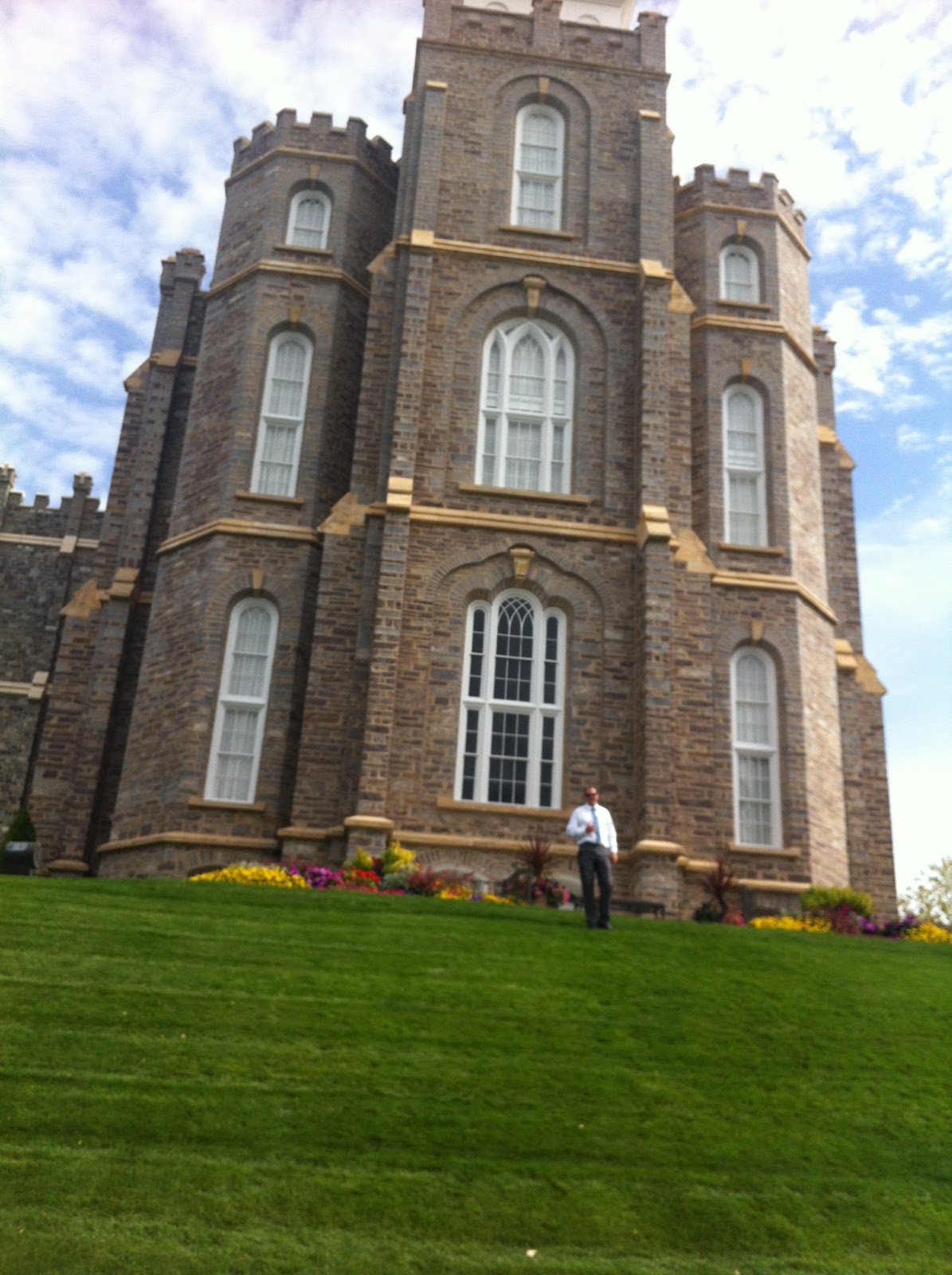
The first call for a Logan Temple: 1873


THE first time it was likely suggested that a temple be built in Logan, Utah was on June 29, 1873.
President Brigham Young, speaking at meetings in Logan, "suggested the erection of a fine Temple to be built on the bench crowning the eastern part of this city," according to the Salt Lake Herald Newspaper of June 29, 1873.
(At the same time, President Young suggested a road be built beyond Franklin to lessen the grade to Soda Springs and Rich County.)
According to LDS.org, the Logan Temple was not officially announced to be built for another three plus years, until Oct. 6, 1876. Its groundbreaking was on May 18, 1877 and its dedication took place on May 17, 1884.


Sunday, August 21, 2016

Don't lose your testimony over a church policy you don't care for ....


CHURCH members should never, ever lose their testimony over a policy of the church.
Policies can and do change. Doctrine doesn't change and knowing the difference between the two is a critical element for LDS Church members to learn.
There are always some policies I don't personally care for, but I don't stop going to Church over them, or lose my faith in spite.
The ultimate reality is that a person probably has a thin testimony if disliked church policies over-rule it.
I've had some relatives get sidetracked and stop going to church over policies changes. The most recent were some gay member policies that spurred some of my loved ones to doubt and falter.
In my 50-plus years of experience in the church, policies change often and considerably.
Reading through a 1963 Church General Handbook of Instructions almost 55 years later illustrated to me the changeability of policies in the church. I implore members NOT to stop coming to church over a policy change they question or dislike. To do so is like jumping off a moving train because you don't like a single item on the railroad's luncheon menu.

NOTE: This article and all of the NighUntoKolob blog are NOT an official website of The Church of Jesus Christ of Latter-day Saints. They are the author's conclusions and opinions only.


The evolution of Stake Conferences


MY recollection of stake conferences in the LDS Church date back to the late 1950s -- and there have been many key changes over the decades.
In my early memories, there were several general sessions of stake conference on Sunday itself. Being young then, "cry rooms" were where I spent some of the those meetings. In the Ogden, Ut. tabernacle, the cry room was in the northwest corner. It was a separate room with a big glass window.
By the 1980s, primary children had their own separate meeting during the general session of stake conference. Hence, the general session was very quiet and almost completed devoid of young children. 
(I kind of miss that element at times. For example, during an Aug. 21, 2016 stake conference general session in my stake, the door behind me might as well have been a revolving door as it kept opening and thudding closed dozens and dozens of times during the two-hour meeting ...)
By the start of 21st Century, there were not any more separate stake conference sessions for primary children and all were in one single meeting.
Since the 1980s, starting times for general session stake conferences were 10 a.m. on Sunday. However, my August 2016 general session was 11 a.m. -- because a leadership meeting was moved from Saturday 4-6 p.m., to Sunday 8-10 a.m. instead.
Also, since the late 1990s, electronic transmissions have bolstered stake conference reception, first with video screens at the far back of the cultural hall, when all the stake was meeting in a single building.
With many more wards in my stake in the 21st Century, broadcasts of stake conference were made to the two other buildings in the stake. Hence, it was like watching a transmission of general conference sessions.  
Also, in 2017, Stake Conference in my stake switched to a 7:30 a.m. Sunday leadership meeting (instead of having it Saturday at 4 p.m.).

NOTE: This article and all of the NighUntoKolob blog are NOT an official website of The Church of Jesus Christ of Latter-day Saints. They are the author's conclusions and opinions only.

Sunday, March 27, 2016

The MIA Maids name origin

Some of these girls at a Girl's Camp would have been "Mia Maids," back in the day.....


I'm in Sacrament meeting and all of a sudden, an organization name I've heard about for decades catches my interest ....


"Mia Maid," a young women's program for ages 14 and 15.

Could this have reference to the old Mutual Improvement Association name?
Turns out it does:

"The name Mia Maid refers historically to the Mutual Improvement Association, which adopted the emblem of the rose as a symbol of love, faith, and purity. Mia Maids today learn about love, faith, and purity as they strengthen their testimony and accept and act upon the Young Women values," according to  LDS.org